Navigating Success: The Simple Guide to Directional Sign Boards

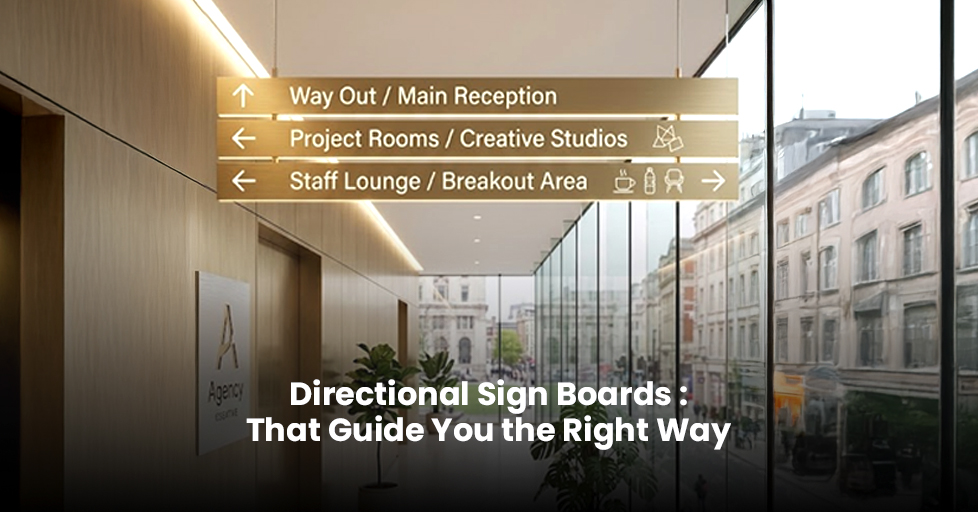
Just think of walking into a corporate office or a busy hospital for the very first time; you see the entire ambience, and without clear signs, the visitors may get confused. Large areas need proper signs, which are directional signs. It plays a major role and at ARC India we believe that helping people find their way can be a good option, making their journey smooth and stress-free. Be it a local clinic or a tall corporate building, each sign that has been seen inside or outside is useful. High-quality navigation signboards show that your business is well organized and we truly care about business. The moment one enters, they see the best directional signboards. ARC India aims to make sure you see the best and is the place you want to go next.
What are Directional Signboards?
In its most basic form, a directional signboard directs people from place to place. These signs contain information about which room people are approaching, which door is an exit, where the elevator is located or a particular room or office you need to find. Unlike a brightly coloured advertisement created to attract purchases, a directional signboard is meant to help. It is intended to be understood very quickly by readers, guiding them from the point of arrival to their intended destination without having to take the time to ask for directions.
The following are types of signboards used to guide:
Identification Signs:
Indicates which room you are in front of.
Directional Signs:
Indicate which direction you should be travelling by using directional arrows. These direct people toward certain areas such as a lobby, restrooms, or exits.
Informational Signs:
Provide a broad perspective of locations, such as a floor plan of the building.
Why is it important in today’s market?
In today’s fast-paced business environment, how someone feels as they traverse your building can be significant.
Why commercial directional signage is so essential:
Saves Time:
Nobody has ten minutes to spare when looking for an office, especially in a complex building structure. Commercial directional signage guides people in the right direction with ease.
Safety:
When an emergency occurs, clear directional signs pointing to exits are a crucial life-saving measure. They assure safety and efficiency in the building.
Professionally Impresses:
Clearly signed offices appear professional and established. It is clear that attention has been paid to every detail of your establishment.
Helpful for Everyone:
Wayfinding signboards not only communicate with clear imagery, but it doesn’t matter if you speak a different language or can’t make out fine print.
Wayfinding Design Services and its Importance
Wayfinding is, in essence, the “art of direction giving”. Wayfinding design plans a space so that finding your way through the building feels easy and natural. We don’t just print signs at ARC India; we help you navigate your way to planning an easier visit.
Importance of Expert Way finding design:
It reduces confusion :
Good design avoids users having to “think too much” about navigating the building.
The right places to put signs :
Identifying areas where users most often feel “stuck”, such as hall corners and elevator banks.
Suits the design of the building:
The signs need to seamlessly blend with the building’s decor.
ARC India works for you:
Walkthroughs/audits: We review movement through the building.
Uses a simple logic system: essential information is placed higher in a hierarchy than information that is not as critical (for example, the location of the “Emergency Room”).
Clean appearance: Maintains a consistent colour palette and font throughout the space to increase recognizability.
Types of Indoor Directional Signboards
Indoor directional signs of all types.
It is important that the interior signs in your premises are easy to read from short distances and appear good in the corridors. You can use the following signs:
Hanging Signs:
The best use of such signs is in the building corridors, as they can be viewed easily even when the corridor is crowded.
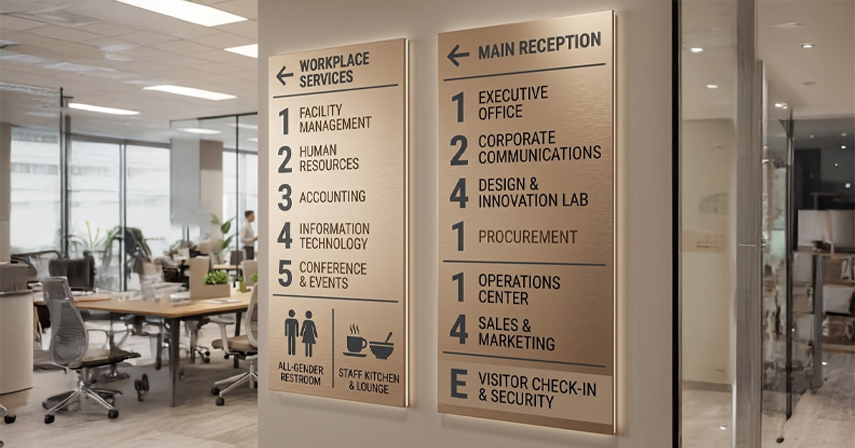
Lobby Directory:
They are basically a large board on your premises at the entry to show each floor and each office.
Projecting Signs:
These are attached to the wall sticking out of the wall, and visible from a distance as you walk in a long corridor.
Desk/door nameplates:
Individual office nameplates.
Types of Outdoor Directional Signboards
Outdoor directional signboards need to be more resilient to outdoor elements. These can endure sunlight and rain and be viewed easily from a distance for a driver.
Pylon Signs:
These are the high signboards located by a roadside that helps direct drivers to your driveway.
Monoliths:
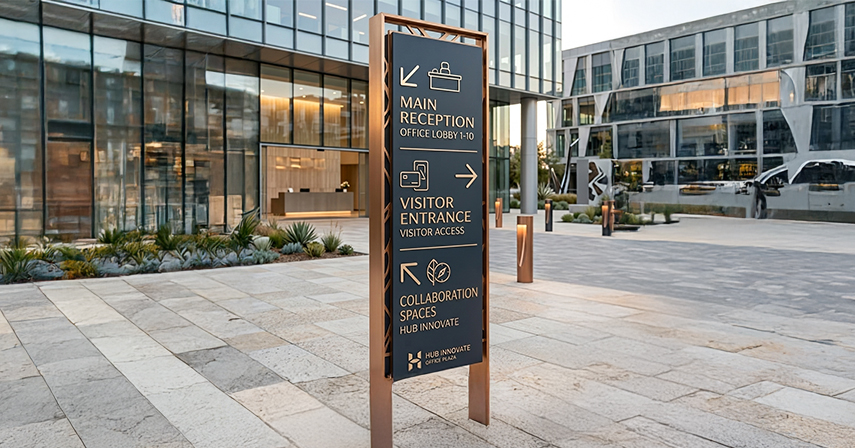
These are lower, solid posts that create a modern and elegant feel to your driveway’s entrance.
Post and Panel Signs:
These signs are mounted on two posts and are a simple yet useful tool to direct traffic into a parking lot.
Reflective Signs:
Essential for safety in the nighttime; drivers can easily read directions at any hour.
Wayfinding Symbols and Labeling
Often, a picture speaks a thousand words. The right use of symbols will greatly simplify navigation signboards for everyone to follow.
Arrow:
The most critical part is the arrow itself and should be obvious to the end user without having to guess where to turn.
Icons:
Using recognizable icons for things like “No Smoking”, “Restrooms” and “Elevator”.
Color Coding:
A distinctive colour on each level or wing to remember where to go (e.g., red for the east wing)
Font Styles:
Our signage uses easily identifiable bold lettering with a clear typeface, as readers may be in a rush.
Outdoor and Indoor Directional signage in different industries
Hospitals:
Helping a sick and anxious patient/relative find their way around is crucial; hospital wayfinding signs relieve stress.
Offices:
A directional office sign can ensure a visitor arrives at the right meeting room without becoming stressed.
Shopping Malls:
Ensuring a shopper can find the food court/cinema/store required saves them getting frustrated and can make a visit more pleasurable.
Schools & Colleges:
A student that knows the campus of a school/college easily finds their way to their specific classroom/lab, etc.
Hotels:
Hotels require signage to show guest access to facilities such as the gym, pool, breakfast area without the need to go to reception each time.
Where to Use These Signs: Focus on Bangalore
Bangalore is expanding rapidly with numerous constructions appearing throughout the city. We offer directional signage services in major areas including;
Manyata Tech Park:
Huge directional signs to help many tech companies.
Whitefield:
Commercial directional signs for the IT corridor with a contemporary feel.
Electronic City:
Robust directional signs that can be used outdoors, catering to huge industrial campuses.
Koramangala:
Customized directional signs for stylish offices & shops.
Indiranagar:
Stylish interior directional signs for startups & boutiques.
The Power of Customization: What You Get with ARC India
With ARC India you receive custom-made signages; we provide bespoke directional signs that align with your corporate identity. Whatever material your aesthetic dictates – chic brushed metal, stylish acrylic, or eco-friendly materials – we will deliver. We always pay attention to the human aspect, where every arrow is correctly pointed and every letter clearly legible. The outcome: signs that are not only helpful but also reflect the quality of your business space. Our expertise will guarantee a durable and stylish signage solution, handled by professionals who understand the intricacies of guiding traffic through Indian business establishments with brevity, simplicity, and sheer quality.
Frequently Asked Questions
Where do I place my signs?
Consider places where a visitor might pause and wonder where the next turning is, a “decision point”. These locations make ideal places for signs.
Are signs difficult to maintain?
Not at all. Many of our signs are made with materials like aluminium or acrylic which just require wiping down with a cloth to look good as new.
Can my logo appear on the directional signs?
Yes, and we suggest that it does. This contributes to the recognition of your brand and, at the same time, assists your customers and visitors.
Does ARC India assist with design?
Yes, we assist with the planning, design, manufacture and installation.