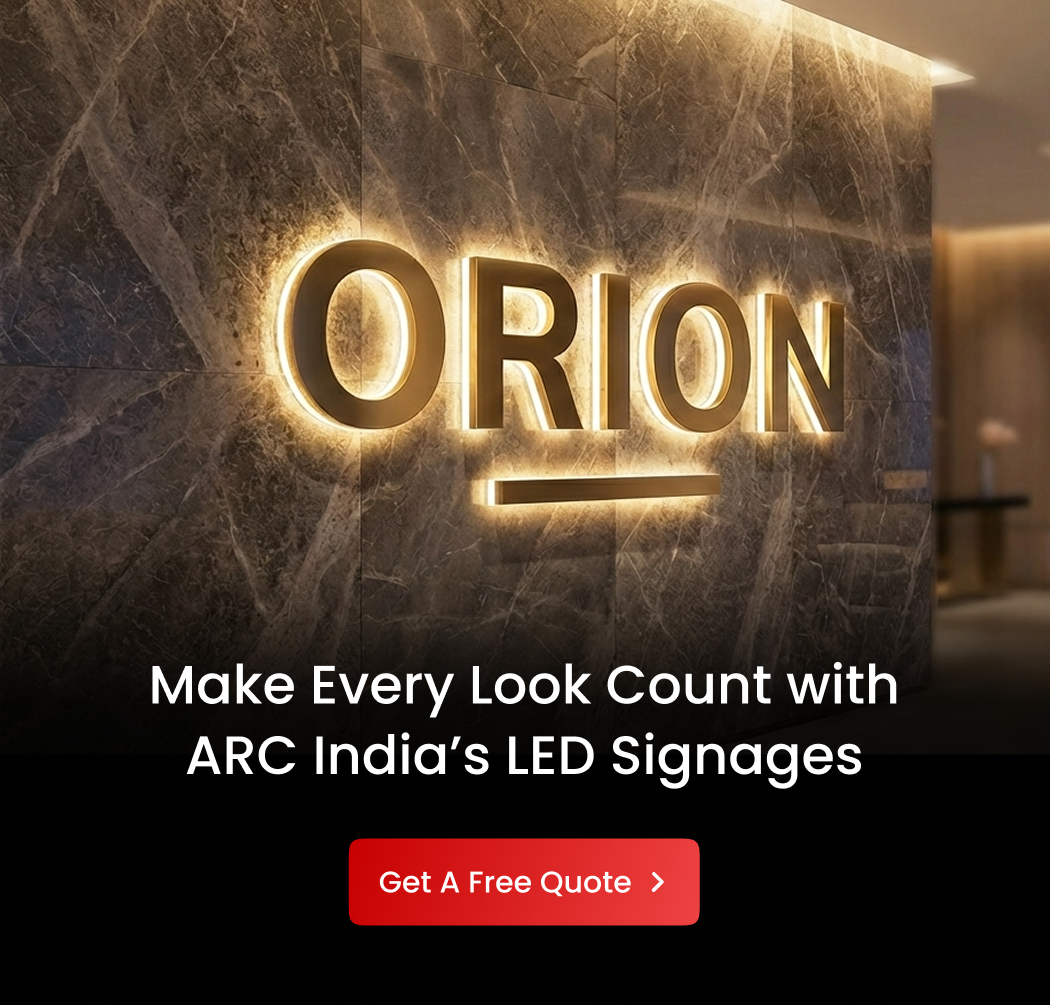
Indoor Wall Graphics: The Simplest Way to Change How a Space Feels

“A blank wall isn’t neutral; it’s a missed opportunity. The right graphic turns it into something people actually notice, remember, and talk about.”
Think about the last time you walked into a space: a cafe, an office, a retail store, and something about the walls just made you stop for a second. Maybe it was a big bold quote, a skyline mural, or a pattern that ran from floor to ceiling. You probably didn’t think, “Oh, that’s a wall graphic.” You just felt the place had character.
That’s exactly what indoor wall graphics do. They’re not just decorations. They shape how a room feels, what people think about a brand, and whether someone lingers or just walks through. If you’re considering wall graphics for your space, whether it’s an office, a shop, a school, or a healthcare centre, this is an honest, straightforward guide to what they are, where they work best, and what actually matters when you order them.
What Are Indoor Wall Graphics?
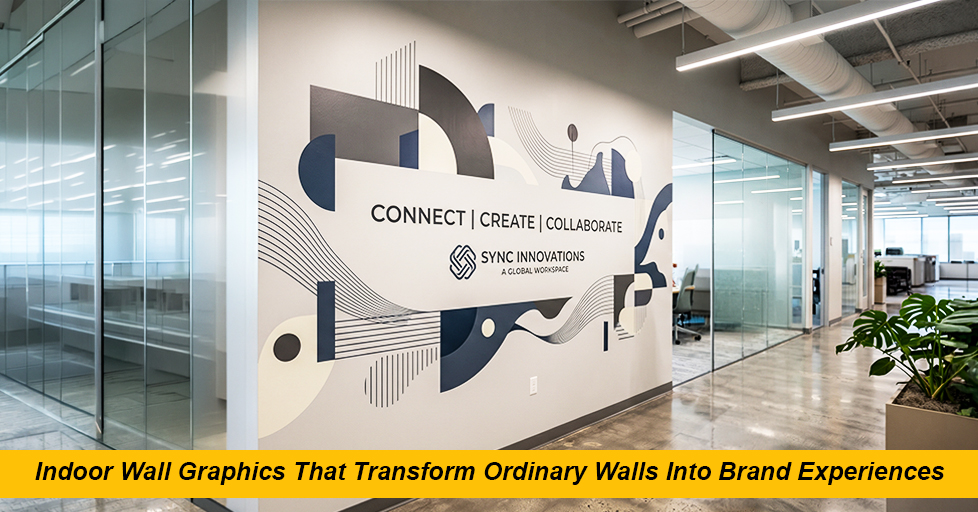
In simple terms, indoor wall graphics are printed visuals applied directly to interior walls. They can be full-colour murals, brand messaging, abstract patterns, wayfinding cues, or anything else you can print. The material is usually a high-quality vinyl film, either self-adhesive or fabric-based, that goes on cleanly and comes off without wrecking the wall when you want to update it.
The range is genuinely wide. On one end you have a single panel with a company tagline in a reception area. On the other end, you have entire corridors covered in custom artwork. Both count as wall graphics. The common thread is that they’re printed, precise, and installed on interior surfaces to change how a space looks and feels. Walls that are working for you don’t need expensive renovation, just the right print, in the right place, done properly.
Where Are Indoor Wall Graphics Used?
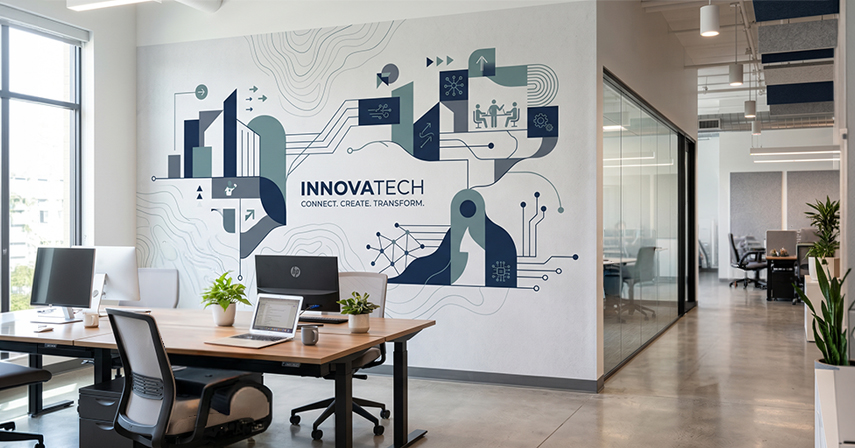
Indoor wall graphics are widely used across commercial, educational, healthcare, and hospitality environments. Take a look at some of the more frequently observed applications:
Offices and Workspaces
Brand message, culture, and motivation as well as cheer on the drab office walls. Across Bangalore’s major business districts such as Whitefield, Koramangala, Electronic City, and Jayanagar, companies use indoor wall graphics to strengthen workplace branding and improve office aesthetics.
Retail and Showrooms
Seasonal promotions, featured products, and the brand story, but it’s not a permanent fixture.
Clinics and Hospitals
Wayfinding, tranquil natural imagery, and department designations – clean and professional work.
Schools and Colleges
Inspirational quotes and theme-decorated corridors and campuses they notice.
Restaurants and Cafes
Custom murals help create a memorable dining experience and often become photo-worthy backdrops that customers naturally share on social media.
Hotels & Hospitality
Feature walls in lobbies, branded corridor graphics, and room accent walls that feel designed, not painted.
Custom Wall Graphics: Why “Custom” Actually Matters
There’s a big difference between slapping any graphic on a wall and using custom wall graphics that were actually designed for your space. Generic stock designs can look out of place, proportionally off, or brand-inconsistent. Custom work means the graphic was built around your actual wall dimensions, your colour palette, and the message you want to put across.
It also means you can use your own photography, your own illustrations, and your brand fonts – things that nobody else has. That matters a lot in competitive retail or hospitality environments where the goal is to create something people associate specifically with you.
The process isn’t as complicated as it sounds. You share your brief and reference images; a designer works up the artwork to scale; you approve it, and it goes to print. The output is a graphic that fits your wall exactly, not approximately, but precisely.
How Large Can You Actually Go?
This is a question that comes up a lot. The short answer: much larger than most people assume. Large wall graphics are printed on wide-format equipment that can handle rolls of material several metres across. A single wall that spans five or six metres wide and three metres tall is not unusual. For very wide spaces, panels are printed and installed in sections with joins that are nearly invisible when done correctly.
The resolution doesn’t drop just because the size goes up; the artwork is prepared at the correct resolution for the viewing distance. A graphic you’ll view from two metres away is prepared at a different DPI than one on a corridor wall where people walk right past it. Getting this right is part of what professional print suppliers handle for you.
So whether you’re covering a feature wall in a meeting room or running a graphic the full length of a warehouse corridor, the scale is achievable. It’s mainly a question of good artwork preparation and proper installation.
What to Look for in Material Quality
Not all indoor wall graphic materials are the same, and this is where a lot of buyers get caught out by low prices. The main things that matter:
Print Quality –
Colors should be vibrant and accurate to your brand. Ask for a proof or sample before committing to large orders.
Adhesive Type –
Removable adhesive is important if you want to update graphics in future without repainting. Permanent adhesive is used where the graphic is long-term.
Surface Suitability –
Smooth painted walls, textured plaster, and concrete all behave differently. The right material and primer matters.
Finish –
Matte finishes minimize glare and are ideal for offices, hospitals, and educational environments. Gloss finishes create a more vibrant appearance but can reflect overhead lighting.
Durability –
Indoor wall graphics aren’t out in the elements but are subject to foot traffic and cleaning. Quality lamination guards against wear.
Fire Rating –
If graphics will be installed in a public commercial space, verify the material is fire-rated.
Installation: The Part People Underestimate
Even a perfectly printed indoor wall graphic can look unprofessional if installation is rushed or surface preparation is ignored. Professional installation is critical to the final appearance and lifespan of wall graphics. Proper surface preparation, alignment, and finishing help prevent bubbling, peeling, and visible seams.
Professional installation teams have the right tools (squeegees, heat guns, and precision cutting blades) and the experience to work on large surfaces without errors. For large wall graphics, especially, proper surface preparation, clean working conditions, and methodical application make the difference between something that looks polished and something that looks like it was done in a hurry.
If you’re sourcing graphics, ask whether installation is included or available as an add-on. Separating print and installation across two different suppliers often means accountability gaps if something goes wrong.
Updating Graphics Over Time
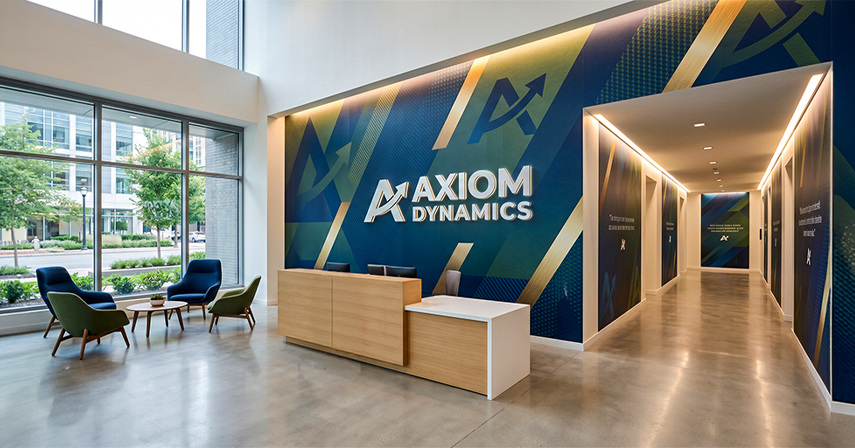
One of the underappreciated advantages of indoor wall graphics over paint or permanent finishes is how practical they are to update. Retail brands change their campaigns. Offices rebrand. Restaurants update their visual identity. With removable vinyl, you can refresh the look without touching the underlying wall.
This also makes them cost-effective in the medium term. Rather than investing in a full repaint or structural changes every few years, you’re swapping out printed panels. The core infrastructure of the space stays the same; only the visual layer changes.
A Few Things Worth Knowing Before You Order
From working with clients across different sectors, a few honest points worth keeping in mind:
- Always share accurate wall measurements. Not approximate, but actual measured dimensions. A few centimeters off can create real problems at installation.
- Check your wall surface first. Freshly painted walls need at least 3–4 weeks to fully cure before vinyl will adhere properly.
- Think about lighting when positioning graphics. What looks brilliant in daylight can wash out or create glare under certain artificial lighting setups.
- Consider whether the graphic needs to work around sockets, switches, or fixtures. Good print suppliers can account for cutouts in the design.
- If you’re in a leased commercial space, confirm with your landlord that removable vinyl is acceptable. Most will agree permanent alterations are the sticking point, not removable graphics.
The best wall graphic projects start with clear, brief and honest site information. Everything else – design, print, installation – tends to fall into place from there.
Why Indoor Graphics Are Worth the Investment
People spend a lot of time thinking about furniture, flooring, and lighting when designing a space. Walls often get left as an afterthought painted a neutral colour and left blank. But walls make up a massive proportion of the visual surface area in any room. Using them well is not a luxury; it’s practical space planning.
Indoor graphics are one of the most cost-effective ways to transform how a space feels and communicates. They work at any scale from a single accent wall to an entire building interior. They can reinforce brand identity, guide people through a space, create atmosphere, or simply make a room more interesting to be in.
For businesses, the ROI conversation is fairly straightforward: a well-branded, visually engaging interior makes a better impression on clients, boosts employee morale, and creates the kind of environment people actually want to spend time in. That’s worth more than most people put on it.
If you’ve been sitting on the idea of doing something with your walls, the practical barriers are lower than you think. The process is manageable, the results are quick to see, and with the right supplier, the whole thing from artwork to installed graphics can come together faster than most renovation projects.
For quality custom wall graphics delivered and installed professionally across India, ARC India is a trusted name with experience across retail, corporate, education, and hospitality sectors. Whether you need a single feature wall or a multi-site rollout, ARC India handles the full process design, print, and installation, and mainly we focus on the B2B customers. If you want to talk through your space and what’s possible, ARC India is a good place to start.
How much do indoor wall graphics cost?
Indoor wall graphics pricing depends on wall size, material type, artwork complexity, and installation requirements. Most projects are quoted on a per-square-foot basis after evaluating the site and design specifications.
How long do indoor wall graphics typically last?
With quality materials and proper installation, indoor wall graphics comfortably last 5 to 7 years in normal interior conditions. They’re not exposed to UV or weather, so degradation is mostly from physical handling or cleaning. High-traffic areas like corridors may see more wear on the edges, which is why lamination matters.
Will wall graphics damage the paint when removed?
If removable-grade adhesive is used and the wall surface was properly prepared, removal is clean in most cases. The key variables are the quality of the underlying paint, how long the graphic has been up, and whether the right adhesive grade was specified. Always confirm this with your supplier before installation.
Can I apply wall graphics to textured or uneven walls?
Lightly textured walls like a mild orange-peel finish can work with certain cast vinyl materials. Heavily textured or rough surfaces like exposed brick are trickier; a fabric-based printed panel mounted on standoffs often works better than adhesive vinyl in those cases. Your installer should assess the surface before committing.
What file format is needed for custom wall graphics?
Vector formats (AI, EPS, PDF) are ideal because they scale without quality loss. High-resolution raster files (TIFF or PSD at 300 DPI or higher at actual size) also work for photographic artwork. Logos and text elements should always be in vector format regardless. If you only have low-resolution files, a good print supplier can often advise on upscaling options.
How long does the full process take in order to install graphics?
For a straightforward project with artwork ready to go, turnaround from order confirmation to installation can be as fast as 5 to 7 working days. More complex projects with original artwork creation, large multi-wall installations, or multiple sites will take longer. It’s worth building in a week’s buffer if you have a specific deadline.