
Indoor Wall Graphics: Types, Benefits, Uses & How to Choose the Right Option

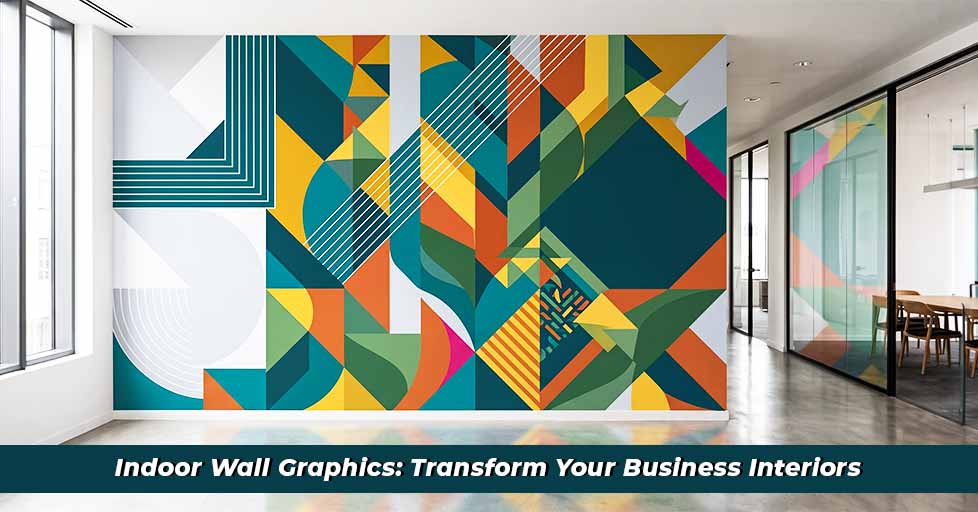
Quick answer first, since that’s probably why you’re here: indoor wall graphics are printed vinyl or fabric displays applied straight onto interior walls, and they can be made in nearly any size, shape, or material a business wants. Most companies use indoor large graphics for two reasons, either to strengthen wall branding at an entrance or lobby, or to make a boring wall actually useful. Retail stores, clinics, gyms, offices, you name it, all of them find some way to use these. This post covers what they’re made of, how big they get, which businesses tend to order them, and why custom sizing matters more than people expect. Skip to whatever section answers your question.
What Are Indoor Wall Graphics?
Put simply, indoor wall graphics are printed material, usually vinyl, sometimes fabric, mounted onto an interior wall to display a design, message, or brand element. That could mean a small logo behind a front desk or a mural stretching across an entire office wall. The main thing that separates them from paint is that they come off. A business can swap a graphic out in an afternoon instead of scheduling a repaint crew.
That removability is honestly the whole selling point for a lot of businesses. Say a company runs a quarterly promotion, they don’t want to commit to a permanent paint job for something that’s only relevant for twelve weeks. A vinyl indoor graphics piece solves that.
Material choice depends on the wall and the budget. Adhesive vinyl works fine on smooth drywall and is the cheaper route. Fabric prints stretched over a frame look more like actual art and hold up a bit better in high-traffic areas where people brush past them, but they cost more and take longer to install. Neither one is “better,” it really just depends on what the wall is being asked to do.
Types of Indoor Wall Graphics
Not all wall graphics are built the same way, and picking the right type usually matters more than people expect. At ARC India, we get asked about this constantly, so here’s a quick breakdown of the main types and where each one actually makes sense.
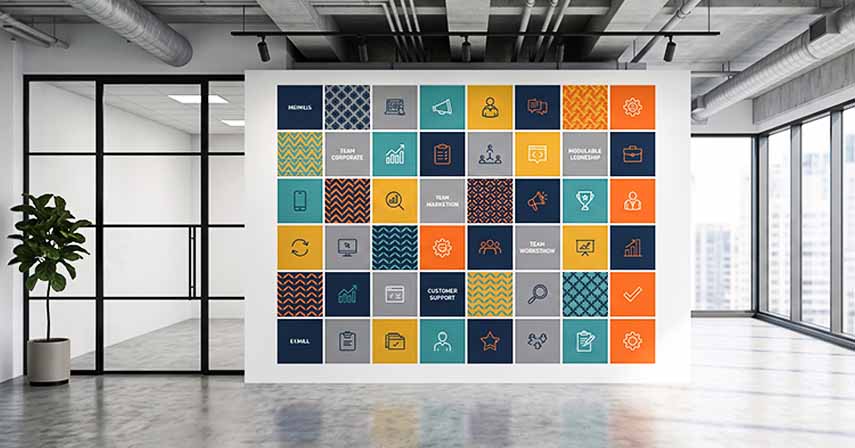
Vinyl wall graphics are the most common starting point. They’re printed on adhesive-backed vinyl and stuck directly onto drywall, which makes them affordable and quick to install. Good for logos, short messages, or anything that might need to be swapped out in a few months.
Fabric wall graphics go a step further in terms of finish. Instead of sticking flat to the wall, fabric is stretched over a frame, giving it a slightly raised, textured look that reads more like framed art than signage. It costs more, but for a lobby or a client-facing space, the difference is noticeable.
Wall decals are basically the smaller cousin of vinyl graphics. Think single icons, short taglines, or accent pieces scattered near a doorway or a reception counter. They’re cheap, fast to apply, and easy to replace if a design gets dated.
Wall murals are the opposite end of the scale, big, immersive, usually covering most or all of a single wall. Restaurants, gyms, and retail stores use murals a lot since they turn a plain wall into something people actually stop and look at, sometimes even photograph.
Die-cut graphics are cut precisely along the outline of a logo or shape instead of sitting inside a rectangular panel. There’s no visible background or border, just the design itself on the wall. It’s a cleaner look, but it does take more precision during production and installation.
Full-wall graphics cover an entire wall edge to edge, floor to ceiling in some cases. These are almost always printed in panels and installed by a trained crew since alignment has to be near perfect for the seams to disappear. This is where a lot of businesses lean on ARC India for the actual installation work rather than trying to handle it in-house.
If you’re not sure which type fits your space, that’s a normal question to have, and it usually comes down to budget, how often the design needs to change, and how much wall space you’re actually working with.
Benefits of Indoor Wall Graphics for Businesses
Different businesses want completely different things from a wall, which is where custom wall graphics actually earn their keep. A law office usually wants something quiet, maybe a frosted vinyl logo and nothing else. A gym wants the opposite, loud colors, bold text, something that matches the energy of the room.
Hospitals and universities lean on wall graphics for practical reasons more than aesthetic ones. Big buildings are confusing, and a wall sign pointing toward radiology or the admissions office saves someone from wandering the halls asking strangers for directions. Retail does it differently again, swapping graphics in and out every season for whatever campaign is running.
Then there’s the branding side of things. Walk into a lobby with a strong wall branding setup and you know within a few seconds what the company is about, before anyone’s said a word. That matters more than people give it credit for, especially for businesses that bring clients on-site for meetings.
Some companies skip the client-facing angle entirely and put graphics inside break rooms or training spaces instead, mostly to reinforce culture for employees rather than impress visitors. Plenty of businesses do both, honestly. There’s no rule saying a company has to pick one or the other.
Common Sizes and Shapes of Indoor Wall Graphics
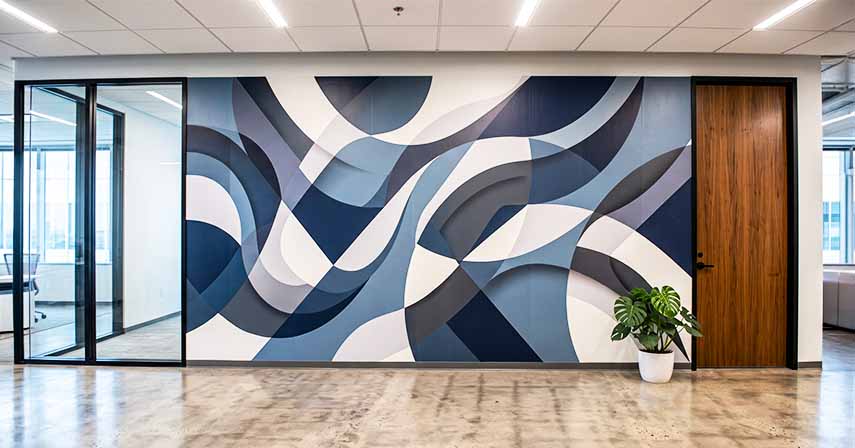
People ask about sizing a lot, and the honest answer is there isn’t a standard size. Large wall graphics can run 15 or even 20 feet across for open lobbies or big retail floors. On the smaller end, some businesses just want a single decal a foot or two wide near a doorway, enough for a logo and maybe a short line of text.
Shape-wise, rectangles are still the most common simply because they’re the easiest to print and hang. But circular decals show up a lot too, along with arched pieces that follow a doorway or window curve, and die-cut shapes that trace a logo outline exactly. Some businesses skip the single-large-piece approach altogether and go with a scattered cluster of smaller shapes instead, which tends to look better in casual spaces like coffee shops or creative studios.
For big wall graphics, printers usually break the design into panels rather than trying to print one massive sheet. A single continuous piece over roughly 8 feet wide gets genuinely hard to transport and mount without air bubbles or wrinkles showing up. Installers line up the panel seams carefully enough that once it’s on the wall, you’d have to look pretty closely to even notice where one panel ends and the next begins.
Material thickness plays into this too. Thicker vinyl holds its shape better on a large wall but is trickier to work around corners and uneven surfaces. Thinner vinyl is more flexible but tends to show any dents or bumps in the wall underneath it. A decent wall graphics printing shop should walk you through this before locking in a size, not after.
Which Industries Can Use This
Pretty much every industry has picked this up in one form or another, just applied differently depending on what the business actually needs.
Retail leans on wall graphics for promotions and seasonal campaigns, basically anything tied to a sales push. Restaurants and cafes tend to go with murals that reflect the food or the neighborhood, something customers end up photographing without being asked to. Corporate offices usually keep it simpler, a mission statement near reception or a timeline of the company’s history along a hallway.
Healthcare offices, dental practices especially, tend toward calming imagery, nature scenes, soft abstract patterns, nothing too loud since the goal is easing a nervous patient, not exciting one. Schools use graphics for wayfinding and to celebrate things like alumni achievements or team records along a hallway wall.
Gyms almost always go bold. It’s hard to sell a high-energy workout in a space with beige walls, so the graphics tend to match the intensity of the brand. Co-working spaces do something similar but lean playful instead of intense, which fits the more relaxed culture those spaces usually go for.
Real estate offices, salons, event venues, even manufacturing facilities, all of them have found a use for wall graphics somewhere in their building. A blank wall doesn’t stay blank for long once a business realizes it can actually be doing something.
Perks of Customization in Today’s Date
Customization isn’t really optional anymore, it’s just expected. A few reasons that’s the case.
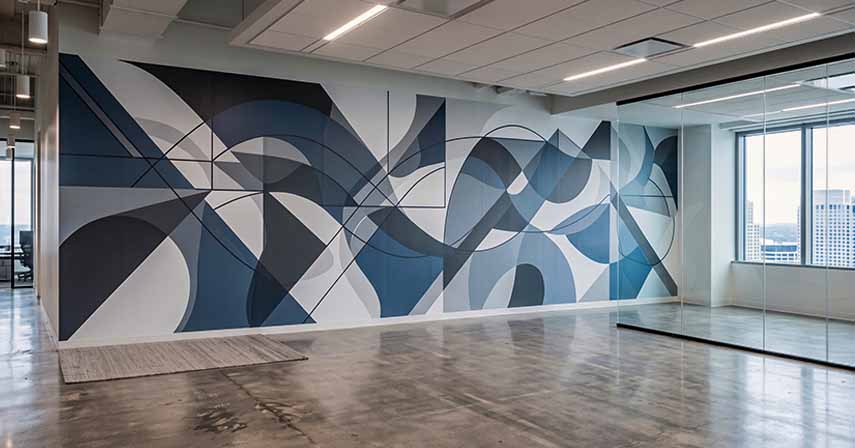
For one, custom wall graphics let a business use its exact brand colors and fonts instead of settling for something generic that could belong to literally any company. That consistency matters more now because customers see a brand across so many places, website, packaging, social media, and now the physical space too. A mismatch stands out.
Custom work also means messaging can change whenever the business needs it to. A seasonal promotion, a product launch, a temporary event, none of it requires committing to permanent signage. That flexibility is a real shift from older signage approaches that were expensive and slow to update.
Custom sizing solves a more practical problem too, which is that walls are rarely perfect rectangles. There’s an outlet here, a support beam there, maybe an odd corner that off-the-shelf graphics just can’t account for. Custom printing works around those obstacles instead of pretending they don’t exist.
And cost-wise, it’s a little counterintuitive, but custom indoor wall graphics often end up cheaper over time than repeated repainting or actual renovation work, mostly because the material is reusable and removable. A business gets to refresh its space regularly without paying for construction every single time.
At the end of the day, customization isn’t about vanity. It’s a practical way for a business to keep its space current without tearing the whole thing apart every time something changes.
What are indoor wall graphics used for?
Mostly branding, wayfinding, and general decoration inside offices, stores, clinics, and similar commercial spaces.
How big can indoor wall graphics be printed?
Anywhere from a one-foot decal to a full wall mural. Anything wider than about 8 feet usually gets printed and installed in panels.
Are indoor wall graphics removable?
Yes, most vinyl and fabric options are designed to come off cleanly, which is a big part of why businesses like them over paint.
What material works best for wall graphics printing?
Adhesive vinyl is the standard choice for flat drywall. Fabric prints look nicer and hold up better in high-traffic spots but cost more.
Can any type of business use custom wall graphics?
Pretty much, yes. Retail, healthcare, education, fitness, and corporate offices all use them, just styled completely differently depending on the business.
Does removing a wall graphic damage the paint underneath?
Not if it’s installed and removed correctly. Done right, vinyl and fabric graphics come off without pulling paint or damaging drywall.
How long do indoor wall graphics usually last?
Since they’re indoors and not exposed to sun or weather, most last several years, depending on the material and how much the wall gets touched or cleaned.
Where do you provide installation and delivery services?
ARC India currently handles installation and delivery across Bangalore, Chennai, Coimbatore, Hosur, and Mysore and other areas with crews familiar with everything from small decal jobs to full-wall installations in commercial spaces.