Why Pylon Signage is the “Silent Salesman” Your Business Needs in 2026

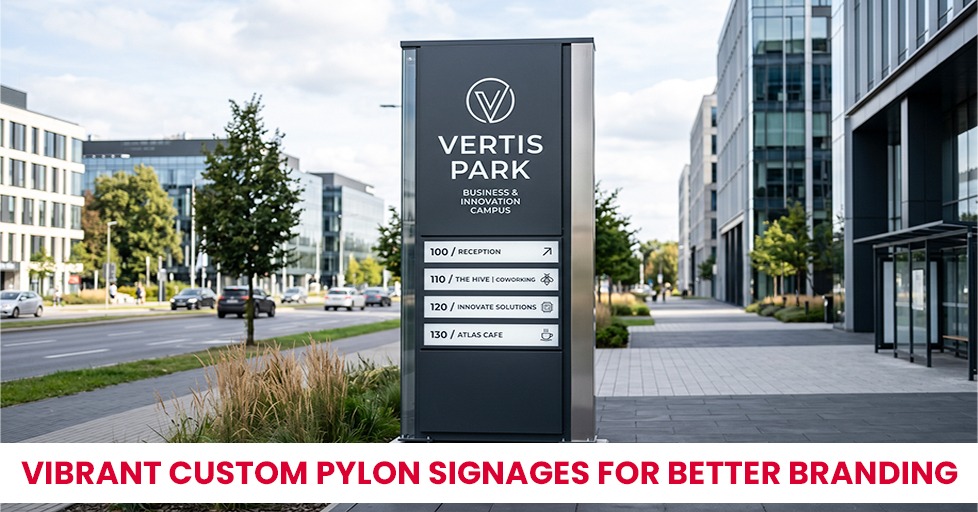
Let’s be honest: in today’s world, everyone is glued to a screen. Whether it’s a GPS or a smartphone, people are distracted. If your business is tucked away in a busy commercial hub or sitting just off a fast-moving highway, a small sign on your front door isn’t going to cut it. You need something that breaks through the visual noise. You need a Pylon Signage.
If you’ve ever felt like your storefront is invisible to passing traffic, you aren’t alone. Many business owners spend thousands on interior decor and digital ads, only to realize that people are literally driving right past them. A pylon sign changes that dynamic. It’s not just a sign; it’s a landmark.
What Exactly is Pylon Signage? (The Deep Dive)
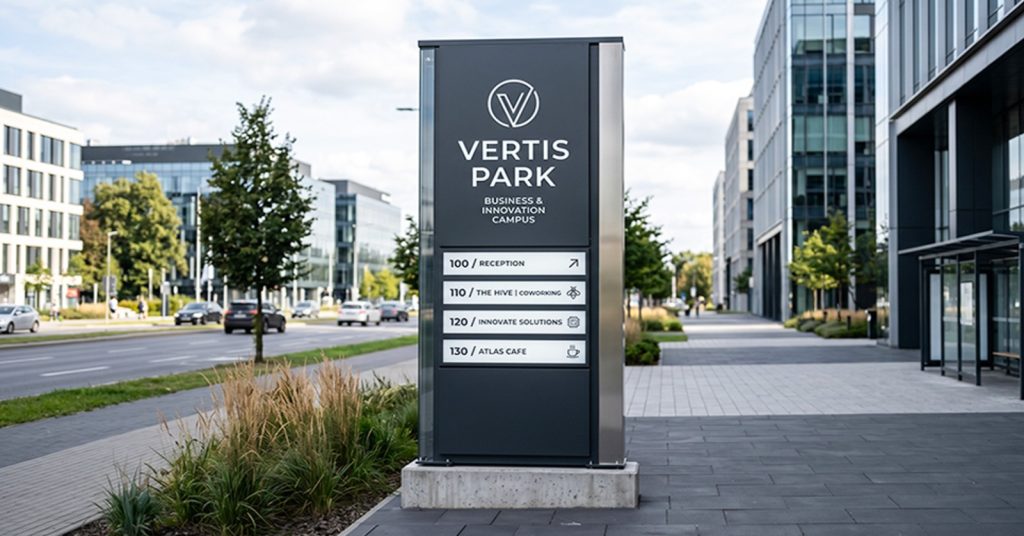
In simple terms, pylon signs are those tall, freestanding structures you see along highways and at the entrances of shopping malls. They are usually supported by one or two heavy-duty steel poles and can reach heights that make them visible from blocks away.
While Monument Signs sit low to the ground and look great for pedestrians, Pylon Signage are built for the “drive-by” audience. They are designed to be seen at high speeds and from long distances, giving drivers plenty of time to decide to pull over.
The Anatomy of a High-Impact Pylon
To understand why these structures cost what they do and perform how they do, we have to look under the hood. It’s not just a “board on a stick”.
- The Foundation: This is the most critical part you’ll never see. Massive concrete footings are buried deep to ensure the sign stays upright during heavy winds or storms. Depending on the height, this could involve several tonnes of concrete and rebar.
- The Pole: Usually made of galvanized steel, these poles are the “bones” of the structure. They can be left exposed for a sleek, industrial look or “cladded” with aluminium covers to look like a solid, sophisticated pillar.
- The Light Box (Cabinet): This is the “face” of your brand. Using acrylic or high-grade polycarbonate panels, this section houses your logo and text. In 2026, we’re seeing more “push-through” acrylic letters that give a premium 3D glowing effect.
- LED Illumination: Old-school fluorescent tubes are effectively extinct. Modern LEDs are brighter, last significantly longer, and won’t hike up your electricity bill. They also provide much more even lighting, eliminating those ugly “dark spots” you see on older signs.
The Psychology of the Highway: Why Pylons Convert
There is a psychological reason why large chain hotels or other industries rely on pylons for their advertisements.
When a driver is moving at 80 km/h, they are processing an incredible amount of data. If your sign is small, they only see it when they are 50 metres away. By the time they realize it’s your business, they’ve already missed the turn.
A pylon sign extends that decision window. By being visible from 500 metres or even a kilometre away, you allow the driver’s brain to move through the stages of:
- Awareness: “Oh, there’s a cafe ahead.”
- Interest: “I actually am feeling a bit hungry.”
- Decision: “I’ll take the next exit.”
- Action: Turning the steering wheel.
Without that height, you lose the “Interest” and “Decision” phases because the driver simply runs out of road.
The Real-World Benefits: Why Go Big?
Choosing to install a pylon sign is a big move, but the ROI (Return on Investment) is often much higher than digital marketing or print ads. Here is why:
1. Owning the Horizon
If your shop is located behind a row of trees, or if there’s a massive flyover blocking the view of your building, a pylon sign is your only way to stay relevant. By rising above these physical obstacles, you claim the visual “real estate” that other businesses are missing out on. At ARC India, the focus during the design phase is always on placement and height to ensure your brand acts as a beacon rather than just another board in the background.
2. Helping Customers Find You (Without the Stress)
Have you ever tried finding a specific shop in a massive industrial estate or a sprawling plaza? It’s frustrating. A pylon sign acts as a guiding light. It reduces “search friction” for your customers. When they see your logo from half a kilometre away, they feel confident and relaxed as they navigate toward your parking lot.
3. The “Anchor” Effect
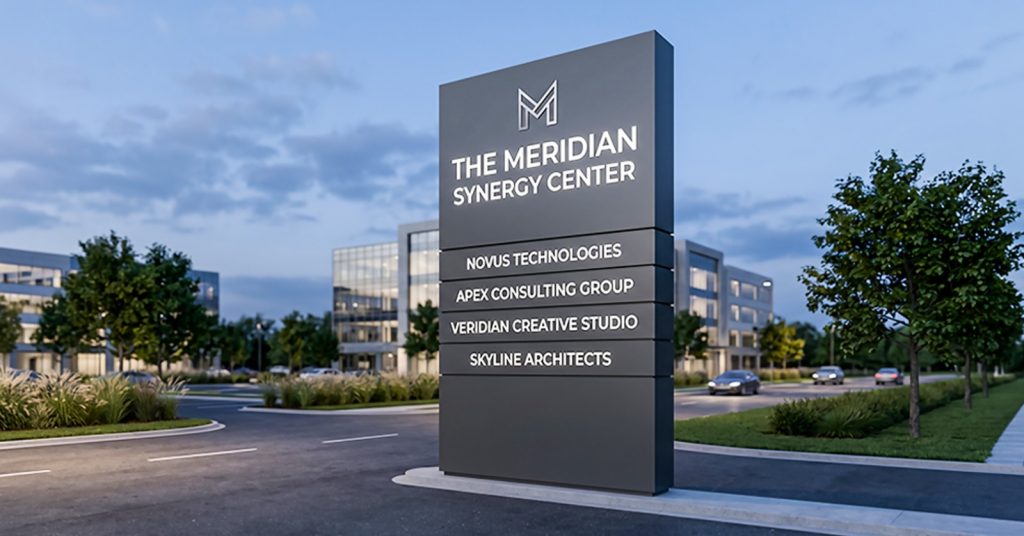
If you own a commercial property with multiple tenants, like a gym, a cafe, and a pharmacy, a multi-tenant pylon sign is essential. It tells the community that your location is a “one-stop shop”, increasing the footfall for every single business listed on that sign. Companies like ARC India specialize in these complex, multi-cabinet builds that balance several logos without looking cluttered or disorganized.
Trends to Watch in 2026: The Tech Evolution
The signage industry is no longer just about paint and metal. It’s becoming a tech-driven field. Here is what is trending right now:
Digital Integration (EMCs)
More businesses are opting for Electronic Message Centres (EMCs) or LED display boards integrated into their pylons. This allows you to change your message, like a “Flash Sale” or a “New Arrival” greeting remotely from your phone or laptop. It turns a static sign into a live marketing channel.
Architectural Harmony
Pylons don’t have to look like “poles” anymore. Designers are using textures like faux stone, wood finishes, and perforated metal to make the sign look like an extension of the building’s architecture. This is especially popular for luxury hotels and high-end corporate offices.
Eco-Conscious Lighting
To be more eco-friendly, modern pylons use smart sensors to adjust brightness based on the time of day. They stay vibrant during a cloudy afternoon but dim down at 2 AM to reduce light pollution and save on energy costs.
Design Tips: How to Not Waste Your Money
A tall sign is a waste of money if it isn’t readable. Design for the sky is different from designing for a screen.
- The 3-Second Rule: Your sign should be readable in 3 seconds or less. If it takes longer, it’s too complicated.
- Keep it Simple: Don’t cram your address, phone number, and list of 20 services. Your brand logo and one primary service (e.g., “car wash” or “diagnostic centre”) are enough.
- Contrast is Key: dark letters on a light background or white letters on a dark background. Avoid colours that “vibrate” together, like red on blue; it makes the text look blurry from a distance.
- Font Choice: Use bold, clean fonts. Fancy cursive might look pretty on a business card, but it’s a disaster when viewed at high speeds. Expert teams at ARC India often recommend specific font weights that maintain clarity even in heavy rain or fog.
Navigating the Legalities: Permits and Zoning
Before you get excited about an 80-foot pylon, you have to talk to the city. Signage is one of the most regulated parts of a business.
- Height Restrictions: Most cities have a “ceiling”. You might want 50 feet, but the city might only allow 25.
- Setback Rules: This is how far the sign must be from the edge of the road or the property line.
- Illumination Standards: Some residential-adjacent areas have “nit” (brightness) limits for nighttime.
Working with a professional firm that handles the permitting process is non-negotiable. They know the local codes and can often negotiate on your behalf if you’re asking for a “variance” (an exception to the rule).
Maintenance: Protecting Your Investment
A neglected pylon sign does more harm than good. If your sign has flickering lights or a cracked face, it tells customers that your business is struggling or that you don’t care about details.
- Professional Cleaning: Dust, exhaust fumes, and bird droppings can make a sign look “grey” and dull. A pressure wash and a wipe-down once a year make a world of difference.
- LED Check-ups: While LEDs last 50,000+ hours, power surges can occasionally knock out a module. Regular checks ensure your brand isn’t “missing a letter” at night.
- Structural Integrity: Every few years, have a technician check the structural bolts and the cladding. Rust is the enemy of any outdoor metal structure; catching it early saves you thousands in the long run.
The Verdict: Why It’s Time to Stand Tall
In an era where every business is fighting for a “click” or a “like”, don’t forget about the power of physical presence. A pylon sign is more than just marketing; it’s a statement of stability. It tells the world that you are here, you are established, and you are easy to find. So if you are looking for the best Pylon Sign Board, then ARC India is your option that can change the entire perception and advertising made easy and renowned for your company.
Whether you’re starting a new venture or looking to revive a “hidden” location, going vertical is often the most effective way to see an immediate jump in footfall. It’s an investment that works while you sleep, making sure that the next car driving by doesn’t just pass you; it stops.
Why Pylon Signage is the "Silent Salesman" Your Business Needs in 2026
A basic reasonable price is being charged, affordable to the market price. So when it comes to pricing, then get in touch with our team of experts to know more about it.
How long does the installation process take?
The actual physical installation usually takes 1-3 days. However, the entire process, including site survey, engineering drawings, city permits, and fabrication, can take anywhere from 4 to 12 weeks. Patience is key when building something that is meant to stand for decades.
Are pylon signs better than monument signs?
It depends on your location. If you are on a high-speed road, a pylon is better. If you are in a quiet professional park with lots of walking traffic and lower speed limits, a monument sign is more appropriate and often looks more “premium” at close range.
Can I include digital screens on a pylon sign?
Absolutely. In 2026, many businesses are choosing “hybrid” designs. They have a static brand logo at the top and a digital LED screen below it to run promotions, time/temperature, or community messages.
What materials are best for the sign face?
Acrylic is the standard for smaller to medium signs because it has great light transmission. For very large signs, we often use “flexible face” material, a heavy-duty vinyl that is tensioned across the frame because it doesn’t crack or blow out during high-wind events like rigid plastic might.