
Allison Transmission – 2000 Series 3D Model Precision Manufacturing
Table of content
- 01 The Project Brief
- 02 Technical Context — Allison 2000 Series
- 03 Scope of Work - 3D Miniature Engineering
- 04 Production Challenges & Solutions
- 05 Project Outcomes
- 06 Impact
- 07 Conclusion
The Project Brief
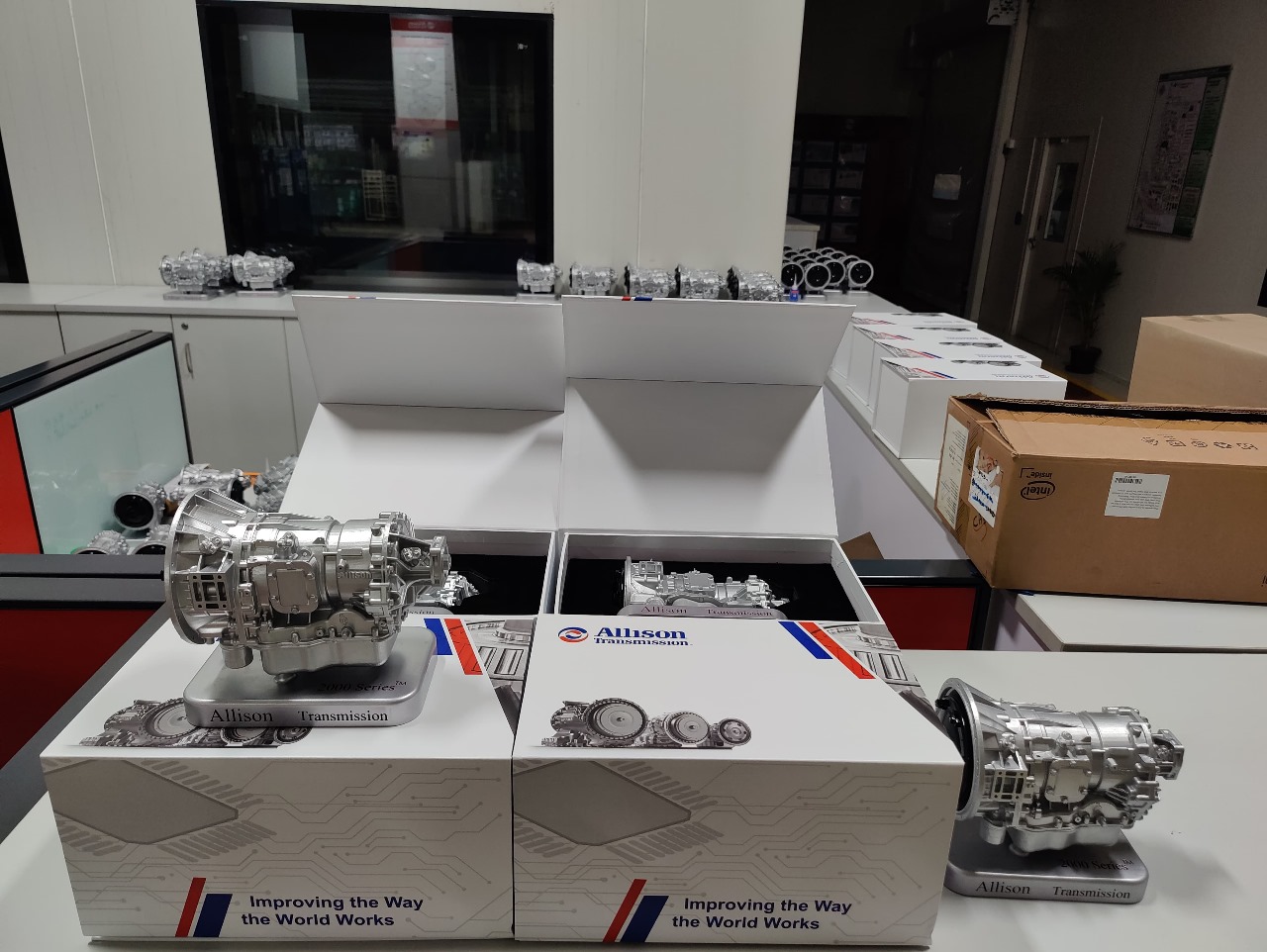
Allison Transmission, a global leader in fully automatic transmission systems, commissioned ARC to design and fabricate high-fidelity scale models of its 2000 Series — a core product line in the company’s light and medium-duty commercial fleet portfolio.
The original 2000 Series transmission is deployed extensively in urban delivery trucks, small to mid-sized buses, and specialty vocational vehicles. Weighing approximately 15,000 kilos in its operational configuration, it is engineered to optimize torque handling capacity, improve power-to-weight ratio, and deliver seamless gear shifting for high-performance, fuel-efficient operation.
The miniature was to serve as a scaled engineering showcase — accurately reflecting the geometry, surface topology, and mechanical architecture of the real unit — while being small enough to function as a premium display piece for Allison’s top performers.
Technical Context — Allison 2000 Series
- Application Range : Light and medium-duty fleets, including commercial trucks, school buses, and small coaches.
- Core Function : Enhances torque multiplication for higher-powered vehicles in a lightweight, compact housing.
- Design Engineering : Planetary gearsets, advanced clutch packs, and optimized hydraulic circuits.
- Operational Benefits : High torque-to-weight efficiency
- Reduced maintenance intervals via self-diagnostic features
- Smooth, automatic shifting under varying load conditions
- Brand Significance: The 2000 Series is a flagship product family – representing Allison’s expertise in precision engineering, advanced metallurgy, and mechatronic control systems.
Scope of Work - 3D Miniature Engineering
Data Acquisition & CAD Modelling
- Translated Allison’s OEM engineering blueprints into parametric 3D CAD data.
- Applied reverse engineering principles to proportionally downscale the model while maintaining dimensional fidelity.
Surface Detailing & Geometry Optimization
- Developed accurate CAD geometry to replicate transmission casing contours, bolt patterns, and gear housing features.
- Included fine-scale representation of planetary gear outlines and cooling fin architecture.
Manufacturing Methodology
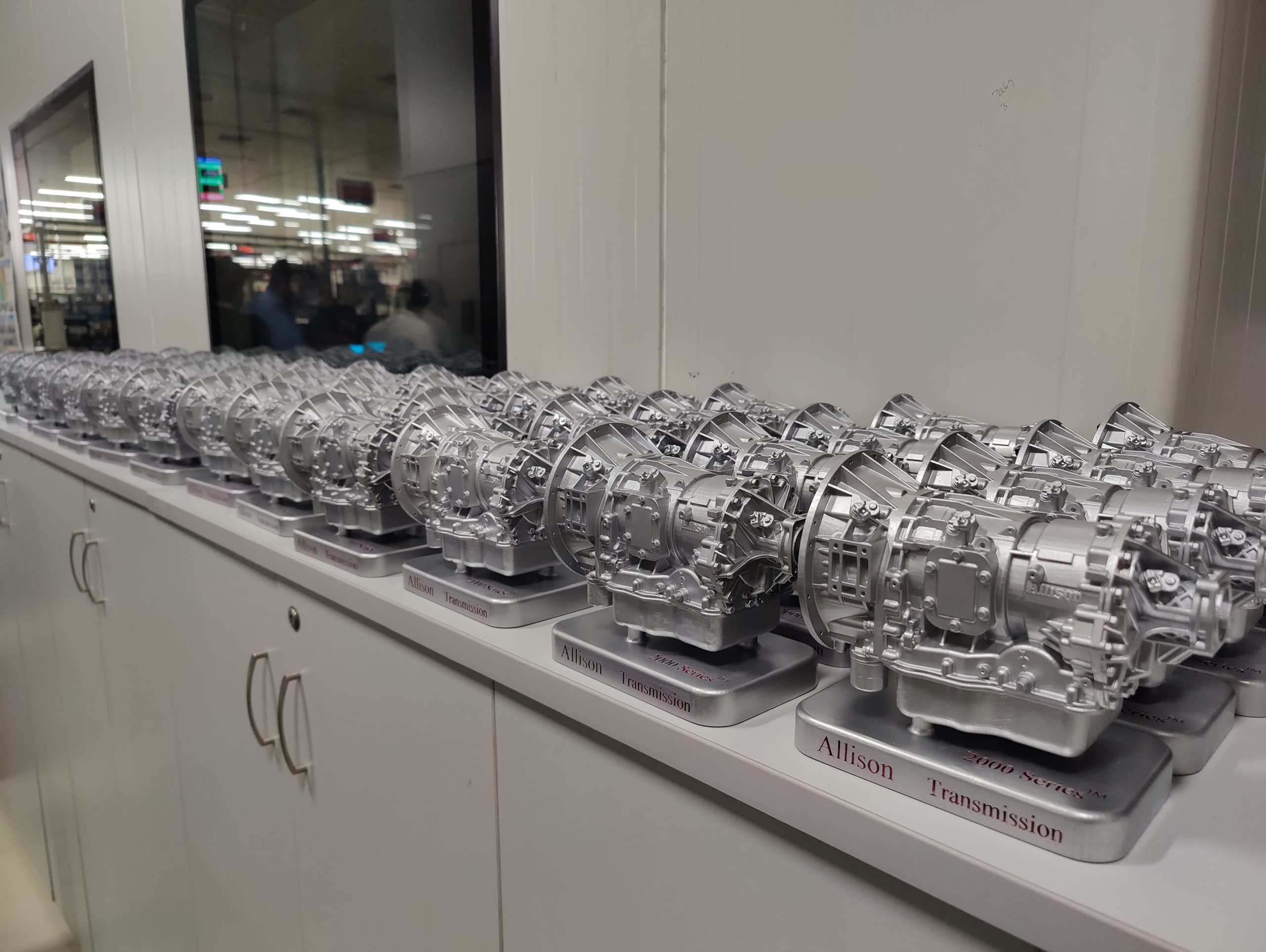
- SLA 3D printing using ABS-like resin at 50-micron layer resolution to capture intricate component detailing such as control modules, actuator housings, and fastening points.
- Metallic silver paint finish, hand-applied in multiple layers to replicate the alloy’s industrial appearance with realistic shading and depth.
Branding & Presentation
- Each baseplate was SLA printed with embossed lettering and model identification details, ensuring the branding was integral to the print itself.
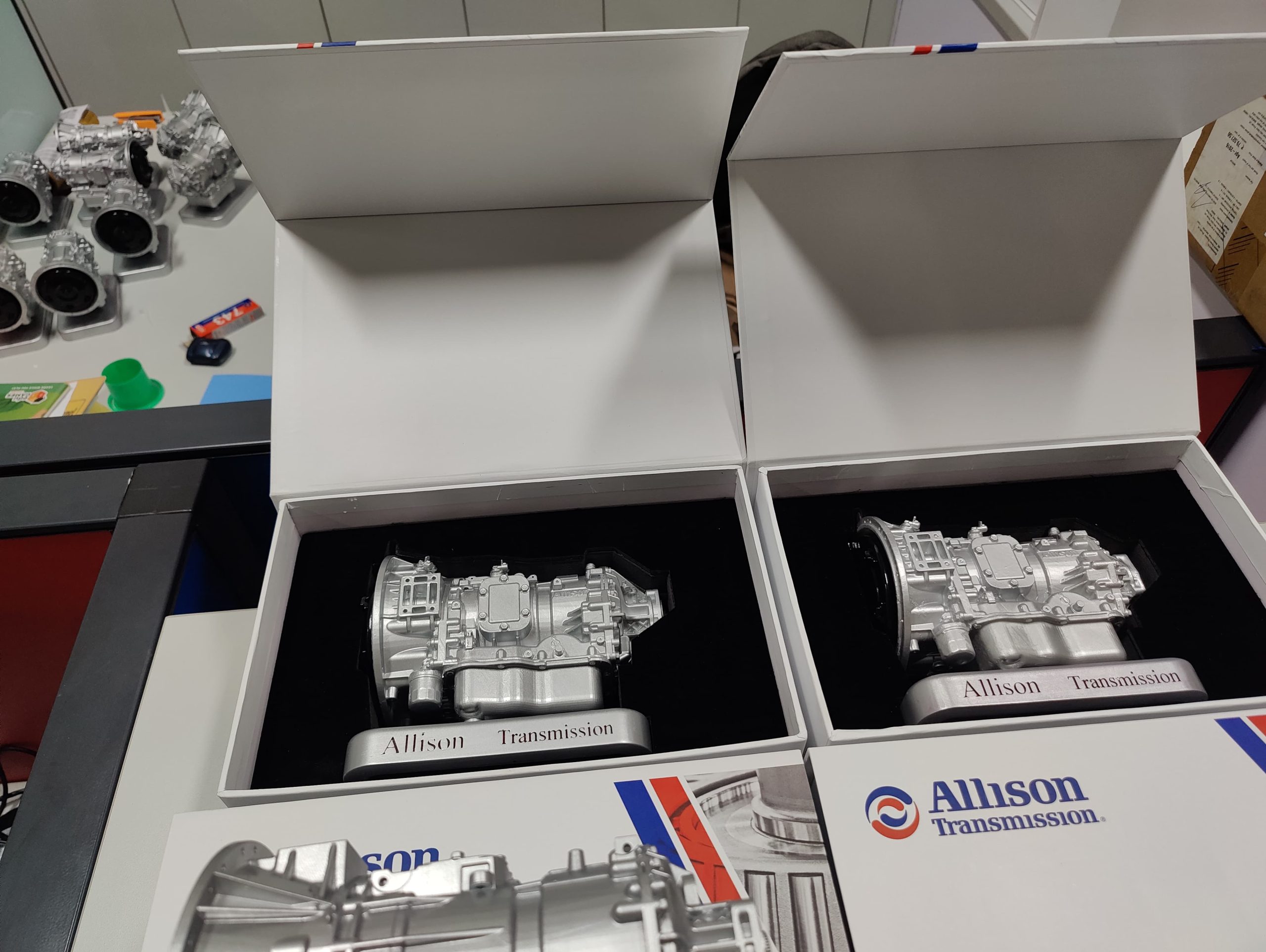
- Delivered in a foam-lined magnetic closure display box for safe transit and premium presentation.
Production Challenges & Solutions
- Micro-Detail Preservation: Leveraged 50-micron SLA print resolution to maintain accurate blade edges, bolt heads, and gear tooth definition.
- Material Fidelity: Chose ABS-like resin for its high strength, dimensional stability, and smooth surface quality.
- Surface Finish Quality: Applied metallic silver paint finish in controlled layers to simulate the look of machined alloy surfaces.
- Deadline Compliance: Parallelized SLA print runs and painting workflows to ensure all 50 units were ready ahead of schedule.
Project Outcomes
- Delivered all 50 precision 3D models ahead of schedule with zero quality deviations.
- Achieved 98%-dimensional accuracy compared to the scaled OEM CAD reference.
- Enhanced employee recognition through a tangible representation of Allison’s engineering excellence.
- Models now serve as permanent display assets in executive offices and engineering centres.
Impact
- Engineering Brand Storytelling:The miniature allows employees and visitors to physically engage with the 2000 Series architecture in a desk-friendly, highly accurate form.
- High-Value Recognition: Provided award recipients with a collector-grade technical artifact, symbolizing their contribution to Allison’s legacy.
- Versatile Deployment: Potential to use the model as a trade show exhibit giveaway, OEM partner gift, or internal training visual aid.
Conclusion
This project demonstrated ARC’s capability to merge SLA 3D printing with ABS-like resin, 50-micron resolution detailing, and premium metallic paint finishing into a single high-impact deliverable.
By transforming the 15,000-kilo Allison 2000 Series transmission into a desktop-scale, engineering-accurate 3D model, ARC reinforced the idea that brand value is best conveyed when innovation can be held in the palm of your hand.